
Why Do Dogs Like Car Rides? The Science, the Signs and the Safety Rules
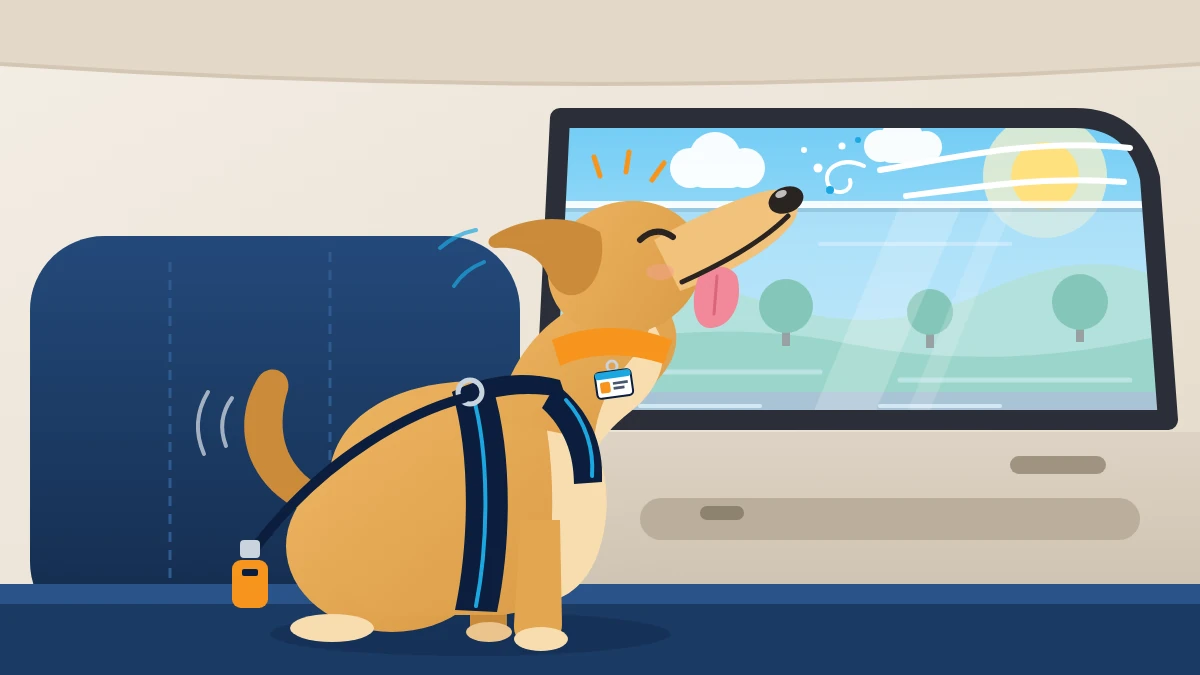
Grab your car keys and watch the magic happen. Your dog spins in circles, whines with joy and races you to the door. So why do dogs like car rides this much? The answer mixes science with plain old love. A ride floods your dog's powerful sense of smell with fresh scents. It also sparks anticipation, because the car often leads somewhere fun. Plus, the pup gets to stay with its social group instead of waiting at home alone. In this guide, you'll learn the brain science behind it and the body language of a happy rider. You'll also get the simple rules that keep car travel with dogs safe.
| Reason | What's happening |
|---|---|
| The brain | Keys and leashes predict fun before the engine starts |
| The nose | Scent currents deliver nonstop news through the window |
| The wind | A rush of wind packs more smells into every breath |
| Instinct | Moving squirrels and birds wake the hunting instinct |
| The pack | Riding along means companionship with their social group |
| The prize | Parks, beaches and drive-thrus build a positive association |
In This Guide
- Do Dogs Really Like Car Rides?
- What Happens in Your Dog’s Brain
- The Window Is a Live Scent Feed
- Why Dogs Stick Their Head Out the Window
- A Car Ride Feels Like a Hunt
- The Car Is a Den That Smells Like the Pack
- The Promise of a Reward
- Why Dogs Love Car Rides but Cats Don’t
- Night Rides, Long Rides and Tired Dogs
- How to Tell If Your Dog Likes Car Rides
- Why Some Dogs Hate the Car
- How to Get Your Dog Used to Car Rides
- Car Safety: Restraint, Heat and ID Tags
- Quick Answers to Common Questions
- Final Thoughts
Do Dogs Really Like Car Rides?
Do dogs like car rides? Many dogs adore them and treat every trip like a party. Still, that love rarely appears out of nowhere. Veterinary scientist Paul McGreevy wrote about this for the science publication Inverse. He argues that most dogs that enjoy travel have learned to enjoy it. A happy passenger is usually made, not born.
Do all dogs like car rides? No, many dogs struggle with them. VCA Animal Hospitals notes that dogs who ride once or twice a year usually head to the vet. They link the car with the stressful visit that follows. Pfizer's research found about one dog in six deals with motion sickness. All breeds seem about equally prone, according to Vetstreet. Experience matters far more than breed.
What Happens in Your Dog’s Brain on a Car Ride
The question “why do dogs like car rides?” has an answer you can see on a brain scan. At Emory University, neuroscientist Gregory Berns trained dogs to lie still in an MRI. Their caudate, a reward area, lit up at a hand signal meaning a hot dog was coming. Researchers tie this response to dopamine and reward prediction.
Now swap that hand signal for your car keys. The jingle predicts fun before the engine ever starts. That rising excitement is classical conditioning in action. A later Emory study found the reward area reacted most to the scent of a familiar person. A seat that smells like you becomes a reward zone on wheels.
“These results indicate that dogs pay very close attention to human signals.”
Gregory Berns, Emory University, via ScienceDaily
Callie and McKenzie in the scanner
The first two scanner dogs were Callie and McKenzie. Callie was a 2-year-old feist, a squirrel-hunting breed. McKenzie was a 3-year-old border collie. Both learned to hold still through reward-based training with no sedation. When the treat signal appeared, their reward centers lit up. The no-treat signal left those areas quiet.
Source: Fox News
| Step | What happens | What you see |
|---|---|---|
| 1. The cue | Keys, leash or garage door predict a ride | Ears up and fast tail wagging |
| 2. The build-up | Anticipation climbs before you leave | Giddy spins and happy whines |
| 3. The ride | Smells and sights deliver sensory stimulation | Nose pressed to the glass, sniffing |
| 4. The payoff | The destination brings fun | Joyful zoomies at the park |
| 5. The repeat | The cue grows stronger | Excitement starts even sooner |
The Window Is a Live Scent Feed
Your dog isn't just looking out the window. She's reading it like a newspaper. Dogs have up to 300 million scent receptors, while humans have about 6 million olfactory receptors. Overall, a dog's sense of smell is 10,000 to 100,000 times stronger than a human's, says PBS NOVA.
Here's a fun way to picture that power. Researcher Alexandra Horowitz says a dog could detect a teaspoon of sugar in a million gallons of water. That's roughly two Olympic swimming pools. Now add scent currents pouring through an open window. Every block brings shifting smells like burgers, cut grass and other dogs. Each enticing whiff keeps the sniffing going.
| Feature | Dog | Human |
|---|---|---|
| Scent receptors (olfactory receptor cells) | Up to 300 million | About 6 million |
| Brain area for smell | About 40 times larger, relative to brain size | Much smaller |
| Overall sensitivity | 10,000 to 100,000 times stronger | Baseline |
| Airflow inside the snout | Splits into separate paths for smelling and breathing | One shared path |
| Exhaled air | Swirls out the side slits and pulls fresh airborne scents in | Leaves the way it came in |
| Bonus smell system | A vomeronasal organ with its own nerve line to the brain | — |
Exact counts vary by breed and by source, from vet clinics to pet food brands like Purina. Bloodhounds sit at the top of the range.
Why Dogs Stick Their Head Out the Window (And Whether You Should Let Them)
Why do dogs stick their head out the window? Mostly, they want more smells per second. Wind pushes extra airborne scents straight into the nose. PBS NOVA describes a University of Oslo study of a hunting dog facing into the wind. It sniffed in one unbroken stream for up to 40 seconds. That stretch covered at least 30 breaths.
It's also a thrill for the whole body. You see flapping ears, called pinnae by vets, plus squinting eyes. The rush of wind feels exhilarating to many dogs. Some look downright euphoric with their tongues flapping. Every yard brings new sights and sounds. All that sensory stimulation explains the goofy grin. Sadly, a happy face doesn't make the habit safe.
Is it safe for dogs to hang their head out the window?
Is it safe for dogs to stick their head out the window? Vets say no for several reasons. The AVMA warns that flying debris can injure your dog's head. A sudden stop or sharp turn can even throw a dog out. Hill's Pet Nutrition adds corneal ulcers and scratches to the list. Keep the window cracked open just enough for a sniff.
| Risk | What can happen | Easy fix |
|---|---|---|
| Flying debris | Eye scratches, corneal ulcers or grit in the ear canal | Keep the head inside the car |
| Power windows | A head or neck gets trapped | Turn on the child locks |
| Sudden stop or sharp turn | Your dog falls or gets thrown out | Use a restraint in the back seat |
| A dog in the next car | Your dog leaps out after it | Keep windows mostly closed |
| Hot, stuffy air | Panting and worse car sickness | Boost ventilation with the AC |
A Car Ride Feels Like a Hunt
There's a squirrel at two o'clock and a cyclist at three. Your dog's inner wolf is taking careful notes. Dogs are built to spot motion, thanks to ancestral instincts shared with wolves. Early research found dogs could recognize moving objects about half a mile away. Still objects only registered at about a third of a mile.
From the back seat, squirrels and birds become moving targets. That wakes the hunting instinct and prey drive most dogs still carry. The family riding together adds classic pack behavior, with the group exploring new ground. Pure curiosity makes every mile stimulating. For some dogs, chasing passing trucks with their eyes feels completely natural.
The Car Is a Den That Smells Like the Pack
To you, it's a crossover with 40,000 miles on the clock. To your dog, it's a cozy den with cup holders. The family car is small, enclosed and soaked in familiar scents. It works like a home away from home. Many dogs bark when strangers pass a parked car. That territorial barking is really guarding the car as their territory.
The bigger win here is companionship. Paul McGreevy says it's likely that dogs see the people they live with as their social group. Riding in the car brings comfort, security and quality time with a favorite person. A secured crate with a familiar blanket feels safe and secure, too.
The Promise of a Reward at the Other End
Every car ride is a scratch-off ticket for your dog. Sometimes it pays out in a pup cup. Here's the part of “why do dogs like car rides” most owners miss. The destination quietly trains the dog. A park, a beach or grandma's biscuit jar builds a positive association through classical conditioning.
Surprise makes the pull even stronger. When only some rides end at the dog park, every ride might. Psychologists call this a variable reward, the same hook behind slot machines. Keep the car itself predictable and calm. Let the prize stay a happy surprise. Above all, keep fun trips far ahead of vet trips.
| Destination | Why dogs love it | Quick tip |
|---|---|---|
| Dog park or trail | New smells and old friends | Leash up before any door opens |
| Coffee shop drive-thru | A pup cup or plain dog treat | Skip salty or sugary human food |
| Bank or pharmacy drive-up | Some tellers keep dog biscuits | Ask before the treat comes out |
| A friend's house | Familiar faces and new territory | Bring a familiar blanket along |
| A vet "happy visit" | Treats and praise with no exam | Ask your clinic if it offers these |
Why Dogs Love Car Rides but Cats Don’t
Why do dogs like car rides and cats don't? History holds most of the answer. A 2026 study in Nature confirmed dogs living with Ice Age hunter-gatherers about 14,000 to 16,000 years ago. That was before farming even began. Cats joined the human story much later. Researchers trace them to the Fertile Crescent, where wildcats moved in as grain stores drew mice.
So dogs bonded with people on the move. Cats bonded with a home base and its territory. Most cats ride only to the vet, which shows in the numbers. In Bayer research, about 58% of cat owners said their cat hated vet visits. Only about 38% of dog owners said that about their dogs.
| Trait | Dogs | Cats |
|---|---|---|
| Ancestors lived alongside | Mobile hunter-gatherers | Settled farmers |
| Social style | Pack animals with a social group | Mostly solitary hunters |
| Bond centers on | People | Home territory |
| Usual car destination | Parks, errands and trips | The vet |
| Owners who say pet hates vet visits | About 38% | About 58% |
| Best ride setup | Certified travel crate or safety harness | Secured pet carrier |
Night Rides, Long Rides and Whether the Car Actually Tires a Dog Out
Ever notice your dog crashes like a toddler after a long road trip? The ride itself did that, believe it or not. For long drives, AAA suggests a break about every two hours. Use each stop for water, a potty break and a short walk. Puppies and seniors may need stops more often. A steady stop routine keeps everyone calmer.
Do car rides tire dogs out? Yes, mostly in the brain itself. Constant smells, sights and motion add up to heavy mental stimulation. Your dog also works to keep its balance on a moving seat. For some dogs, it tips into sensory overload and feels overwhelming. Many dogs snooze hard once they get home. Still, a tired brain is not a fit body.
Road trip packing list
- Fresh water and a collapsible bowl for every stop.
- A crash-tested harness or a strapped-down travel crate.
- A familiar blanket that smells like home.
- Poop bags, paper towels and an old towel for spills.
- A leash you clip on before any door opens.
- A current dog ID tag plus vet records in the glove box.
Do dogs like car rides at night?
Do dogs like car rides at night? Plenty of dogs enjoy them just as much after dark. The American Kennel Club (AKC) explains that dogs have many light-gathering rods in the retina. A reflective layer called the tapetum lucidum boosts dim light, too. So dogs still notice movement on dark roads. Darkness also hides much of the busy scenery. Cooler, quieter roads can make the ride feel soothing.
Is a car ride the equivalent of a walk?
Is a car ride the same as a walk for a dog? Sadly, the honest answer here is no. A ride burns almost no physical energy. Most dogs need 30 minutes to two hours of exercise daily. Are car rides good for dogs? Yes, as a fun bonus on top. Drive somewhere new, then let your dog explore on foot.
Two weeks of sniffing
Researchers Charlotte Duranton and Alexandra Horowitz tested pet dogs before and after a two-week program. One group practiced nosework every day. The other practiced heelwork, which is obedience-style walking. Only the nosework dogs grew more optimistic on a judgment test. The lesson is simple: drive to a sniff-friendly spot, then let the nose work.
Source: Purdue Canine Welfare
How to Tell If Your Dog Likes Car Rides
Your dog can't leave a five-star review. Their body language writes one anyway. How do I know if my dog likes car rides? Watch the moment you open the door. A fan hops in without coaxing. You'll see a loose body, soft eyes and easy tail wagging. Calm behavior during the drive seals the deal.
Here's where things get a little tricky. A scared dog and a queasy dog can look alike but need different fixes. How can I tell if my dog is carsick? VCA lists drooling, pacing, whining and lip licking as signs. Fear shows up as trembling and restlessness, two classic stress signals of travel anxiety.
| Clue | Loves the ride | Nervous rider | Carsick rider |
|---|---|---|---|
| Getting in | Jumps in and waits by the door | Freezes or pulls back | Hesitates after past sickness |
| Body | Loose and wiggly, with tail wagging | Stiff and trembling, tail tucked | Still and hunched |
| Mouth | Relaxed, open "smile" | Panting when it isn't hot, lip licking | Heavy drooling and swallowing |
| Sounds | Happy whines near fun spots | Nonstop whining or barking | Whining right before vomiting |
| Energy | Alert and curious | Restlessness and pacing | Lethargy and droopy eyes |
| After the ride | Bounces out ready to play | Hides and recovers slowly | Nausea fades within an hour or two |
Why Some Dogs Hate the Car
Some dogs don't hate the car at all. They hate where it keeps taking them. Motion sickness is the first big cause. The inner ear feels movement that the eyes can't match. That confuses the vestibular system and triggers nausea. Memory is the second big cause. Negative associations with the vet cause car anxiety in many dogs.
Pain is the sneaky third cause. A dog with sore hips may dread the jump into the car. Vets can check whether the fear comes from motion sickness, a joint problem or anxiety. A simple ramp can change everything. VCA Animal Hospitals adds that an inner ear infection or vestibular disease can make dogs prone to nausea, too.
| Cause | Common clues | What helps |
|---|---|---|
| Motion sickness | Drooling and vomiting mid-ride | Face forward, cool air, short trips and vet-prescribed anti-nausea medicine |
| Negative association | Fear before the car even moves | Desensitization, counter-conditioning and fun outings |
| Joint pain | Hesitates at the jump, stiff afterward | A vet exam plus a ramp or lift |
| Ear problems | Balance trouble or a sudden change | A vet check for inner ear infection or vestibular disease |
| Travel anxiety | Trembling, panting and hiding | Training first, then ask about calming treats or anxiety medication |
Do puppies like car rides?
Do puppies like car rides? Many puppies feel queasy at first. Motion sickness is more common in puppies than adult dogs because their inner ear is still developing. The good news is that puppies often outgrow car sickness by about one year old. Still, a frightening first ride can linger. Experts call the first three months the key socialization window. Keep early outings to happy short trips.
How to Get Your Dog Used to Car Rides
Think baby steps, not a cross-country road trip. Your first stop is the end of the driveway. How do you get a dog used to car rides? You pair desensitization with counter-conditioning, step by step. That means gradual exposure linked to good things. Slowly, a negative association turns into a positive association.
Set your dog up to win from day one. The AKC suggests practicing with a crate or dog seat belt away from the car first. Seat your dog facing forward to cut blurry side views. Reward each small win with treats and praise. This reward-based training doubles as trust building. Above all, keep letting your dog set the pace.
Your 8-step car confidence plan
- Turn the parked car into a treat zone by serving meals beside it, then inside it.
- Sit inside together with the doors open and offer a long-lasting chew.
- Start the engine, give a treat, then switch it off again.
- Roll to the end of the driveway and back, then celebrate like you won.
- Drive around the block once and head straight home.
- Take short trips to places your dog loves, like the park.
- Add a few minutes each time, because repetition builds confidence.
- Teach your dog to wait for a release cue before hopping out at unfamiliar stops.
Golden rule: Visible anxiety is a signal to stop the training session. End on a calm note and drop back one step next time. (Bond Vet)
Car Safety: Restraint, Heat and the Tag That Gets Them Home
Love car travel with dogs but respect the physics every single time. In an AAA and Kurgo survey, 59% of dog-owning drivers admitted a distracting habit. About 21% let their dog sit in their lap. Only 17% used any restraint at all. That's a lot of driver distraction. AAA says looking away for two seconds doubles crash risk.
In a collision, physics turns brutal. An unrestrained dog weighing 10 pounds hits with about 500 pounds of force at 50 mph. An 80-pound dog at 30 mph hits with about 2,400 pounds. That force can hurt any passenger nearby. So dogs should ride restrained in a crate or crash-tested harness. And a dog should never ride in the driver's lap.
Buckle Up: Crates, Harnesses and the Back Seat
Not every “crash-tested” label means much, as the case study below shows. Look for crash-test certification from the Center for Pet Safety (CPS) on any safety harness, travel crate or pet carrier. Buckle it into the back seat, far from the front airbag. A dog car seat booster mostly adds comfort, not proven crash protection.
“If it is not on our list, do not buy the product.”
Lindsey Wolko, founder of the Center for Pet Safety, via Action News Jax
The 2011 harness crash test
CPS strapped crash-test dog dummies into popular harnesses. It used the same federal test that rates child car seats. Every harness failed to protect the dog or the people. Some dummies flew forward like projectiles. Later testing led to a 2014 CPS harness standard and a certified products program.
Source: CBS News
| Option | Crash protection | Best for | Watch out for |
|---|---|---|---|
| CPS-certified travel crate, strapped down in back | Highest | Anxious dogs and long trips | It must be tied down |
| CPS-certified safety harness with the seat belt | High | Dogs who ride often | Clip to the harness, never the collar |
| Back-seat barrier or hammock | Low | Calm dogs on short trips | Not real crash protection |
| Loose in a pickup truck bed | None | Never | Falls, debris and some state laws |
| Loose in the cabin or a lap | None | Never | Airbag injuries, a sudden stop and distraction |
Legal note: California Vehicle Code Section 23117 limits animals riding in open truck beds on highways. Unless the bed is enclosed or has 46-inch sides, the animal needs a secured cage or cross tethering. Hawaii bars drivers from holding an animal in their lap when it interferes with control. Only a handful of states have truck-bed rules like California's.
How Fast a Parked Car Turns Dangerous
Never leave your dog in a parked car, not even for a minute. Cracking the windows does not slow the temperature rise in a parked car. A 2005 study in the medical journal Pediatrics showed exactly that. It also found about 80 percent of the temperature rise happens in the first 30 minutes. Dogs can develop heatstroke in minutes.
| Minutes parked | Temperature rise | Inside on a 75°F day | Inside on an 85°F day |
|---|---|---|---|
| 10 | +19°F | 94°F | 104°F |
| 20 | +29°F | 104°F | 114°F |
| 30 | +34°F | 109°F | 119°F |
| 60 | +43°F | 118°F | 128°F |
Within an hour, a parked car can heat up about 40 degrees Fahrenheit above the outside temperature. Temperature rise figures come from the AVMA. Inside temperatures are estimates based on that rise.
Good to know: The National Weather Service warns that a dark dashboard or seat can reach 180°F or more. Thirty-two states plus DC have laws about animals left in parked cars. Sixteen states protect bystanders who break in to save one, if they follow set rules. In hot weather, the safest seat for your dog is at home.
The ID Tag That Gets Them Home
One spooked leap at a rest stop can mean a lost dog in an unfamiliar town. The ASPCA found 15% of lost dogs got home thanks to an ID tag or microchip. The AKC also advises ID on the crate in case you're hurt. Clip a dog ID tag with your number to the collar before every ride.
“It also highlights the importance of ID tags and other forms of identification...”
Emily Weiss, ASPCA, via ASPCA
Give Your Co-Pilot a Pet Drivers License ID Tag
Road trips are more fun when your dog rides with ID. Our Pet Drivers License ID tag looks like a mini driver's license, with your dog's photo, name and breed plus your contact details. If your pup ever slips away at a rest stop, a stranger can see who to contact right away.
Why Do Dogs Like Car Rides? Quick Answers to Common Questions
Let's recap everything in one quick breath. Dogs love the car for the smells, the brain buzz, the pack time and the prize. Most of that love is learned through positive association and repetition. That means you can build it, one good ride at a time.
Still have a nervous rider or a long trip coming up? The quick answers below cover the questions owners ask most. Each answer points back to the deeper sections above for the full story.
What is “I love you” in dog language?
A soft, relaxed gaze is one of the clearest ways a dog says it. Research shows this kind of mutual gazing raises oxytocin, the bonding hormone, in both dogs and their owners.
Why do some dogs hate car rides?
Usually it comes down to motion sickness or a learned link between the car and scary vet visits. Joint pain or a frightening first ride can also cause it.
Why do some dogs like cars?
Cars bring a rush of new smells, time with their favorite people and trips to fun places. Over time, the car itself becomes a signal that something good is coming.
Are car rides good for dogs?
Yes, as long as your dog rides restrained and never waits alone in a parked car. They give great mental stimulation but don’t replace a daily walk.
What are 5 signs your dog loves you?
Your dog greets you at the door, follows you from room to room and leans against you. It also makes soft eye contact and begs to join you on every car ride.
Final Thoughts
So, why do dogs like car rides? It comes down to nose, brain, pack and the promise of a prize. Your part is the seat belt, the water bowl and the ID tag. Start with short, happy trips and let each good ride build the next one.
Ready for Your Dog's Next Road Trip?
Make sure your co-pilot never rides without ID. Design a Pet Drivers License ID tag with your dog's photo, name and your contact details.
Start Your Free Preview MyPetDMV pet ID cards and tags are novelty items for fun and identification. They are not official or government-issued licenses and do not replace your city or county dog license.

